It all seems pretty straightforward at first glance. The customer makes an order, the product is delivered, and life goes on. The process that goes on behind the scenes is quite intricate in terms of inventory management, order handling, packaging, shipment, and returns processing, and most DTC brands don’t realize just how much they have to do after a certain order volume is reached.
It’s often at this point that brands start looking for solutions, and one of those solutions often comes in the form of 3PL warehouse fulfillment services, taking care of the logistical side of things so brands can take care of products, marketing, and customers.
How a 3PL Handles Direct-to-Consumer Orders
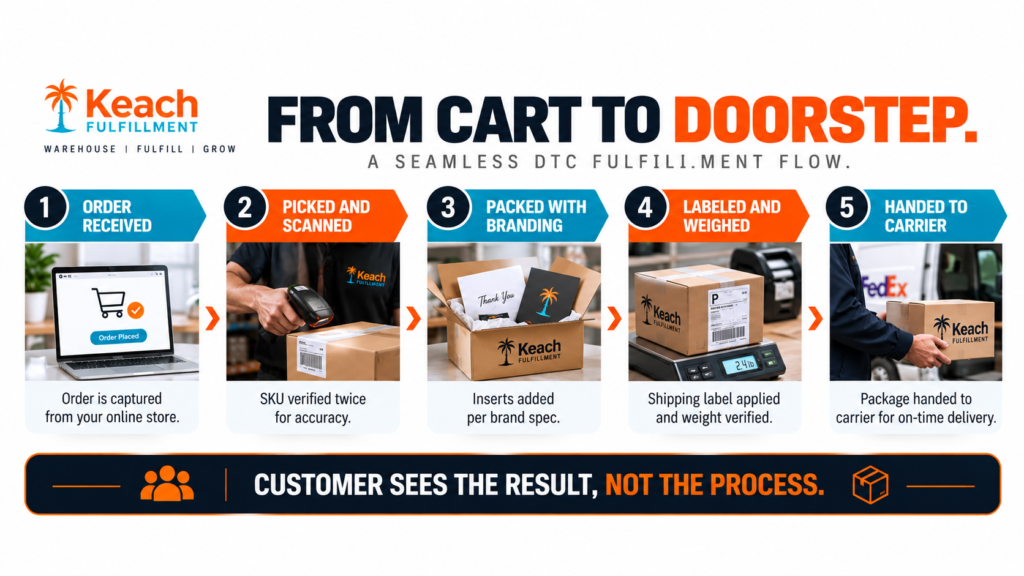
Understanding how does a 3PL handles direct-to-consumer orders starts with the flow itself. When a customer places an order on your store, the order data pushes to the warehouse management system, where it gets queued, picked, packed, and shipped according to the rules you’ve configured in advance.
What makes DTC fulfillment different from wholesale or retail distribution is that every order is small, individual, and headed to a different address. That changes everything about how the warehouse operates. Pickers walk the floor constantly rather than pulling full pallets. Packers handle individual items with care rather than bulk cartons. Carriers get hundreds of small shipments a day rather than a few large ones. It’s more labor-intensive and more detail-oriented, which is why experienced 3PL warehouse services invest heavily in systems that catch errors before a package leaves the dock.
The other thing DTC demands is speed. Customers expect updates, tracking, and fast delivery, which means the warehouse has to operate on a rhythm that matches consumer expectations rather than business-to-business timelines.
Pick and Pack for a DTC Startup
For a DTC startup, the pick and pack process is where the customer experience is actually built. Every package that goes out is a physical representation of the brand, and a single missing item or crushed box undermines everything the marketing has been promising.
3PL pick-and-pack for DTC startup operations tends to run on a few core principles. Items get scanned at multiple points to catch errors before shipping. Packaging materials get selected based on product type and shipping method. Inserts, cards, and branded elements get added according to your specifications rather than whatever’s convenient. And exceptions, like a missing SKU or an address problem, get flagged immediately rather than discovered by the customer.
The volume question comes up constantly for new brands. Is a 3PL worth it for a DTC startup that’s only shipping a few dozen orders a week? The honest answer is that it depends on how much time the founder is spending on fulfillment and what else that time could be doing. If packing orders is eating evenings and weekends, the math usually favors outsourcing sooner than expected.
For brands that need a more detailed view of what the transition involves, understanding how long 3PL onboarding takes and what the first 30 days involve gives a realistic sense of how quickly the operation actually settles.
From Cart to Doorstep: The DTC Fulfillment Journey
Branded Unboxing and the Details That Build Loyalty
One of the questions DTC brands ask most often is whether a 3PL can handle branded unboxing without turning every package into a generic shipment. The answer is yes, and the difference between a warehouse that does this well and one that doesn’t is usually about how much customization they’re willing to build into their workflow.
A capable provider will store your branded boxes, tissue paper, stickers, insert cards, and any other packaging elements as separate SKUs and pull them into every order according to the rules you set. That means every customer gets the same unboxing experience regardless of which picker handled the order, which matters because inconsistency is more damaging than a simple package done well.
Most brands find that the strongest unboxing experience isn’t the most elaborate one. A clean box, a well-written insert card, and products that arrive undamaged do more for repeat purchases than confetti and elaborate packaging ever will, which is something the best 3PL warehouse services for DTC brands understand intuitively.
Before any of that matters, though, the partnership itself has to get off the ground, and knowing what to expect when partnering with a 3PL provider for the first time helps set realistic timelines for how quickly your packaging specifications get translated into daily practice on the warehouse floor.
Keach Fulfillment handles pick, pack, and ship so you don’t have to.
Check out how we handle it.Where Shipping Performance Shows Up
Shipping is the part of the operation customers actually notice, and it’s where a good provider earns its keep. Faster delivery lifts conversion, lower shipping costs protect margin, and both improvements come from the same underlying advantage, which is carrier leverage that a single brand can’t negotiate on its own.
The mechanics behind how 3PL shipping optimizes order delivery times and carrier rates come down to volume and placement. A warehouse shipping thousands of packages a week gets rates a small brand never will, and strategically placed facilities mean shorter zones, which cuts both cost and transit time at the same time.
For DTC brands, this is where the math starts making sense. The savings on shipping often cover a meaningful portion of the fulfillment cost, and the faster delivery times translate directly into better conversion on the store itself.
Multi-Channel DTC Operations
DTC brands will ultimately grow beyond just using their own storefront to use marketplaces, wholesalers, and retail partners. These developments mean that fulfillment needs change. It is essential for inventory to be accurate across all channels, returns need to go through the proper channel, and the customer needs to receive the same service regardless of which channel they purchase or return from.
Choosing the right 3PL provider for omnichannel order fulfillment involves checking how they track inventory across every platform, not just the store you’re currently focused on. A provider that keeps clean records everywhere makes the expansion easier, and one that doesn’t turns multi-channel selling into a reconciliation project that eats time nobody has to spare.
Protecting What You’ve Built
Inventory is the single largest investment most DTC brands make, and it’s worth understanding how a provider handles the situation when something goes wrong. Packages get damaged in transit, pallets get misplaced during moves, and counts occasionally come back short, and the difference between a good provider and a bad one shows up in how those situations get resolved.
Understanding 3PL lost or damaged my inventory, who pays for that before it happens means you’re not learning about liability terms for the first time during an actual dispute. Clear documentation, honest reporting, and a claims process that doesn’t require legal help are the traits to look for, and they’re worth asking about during the sales conversation rather than after the contract has already been signed.
Conclusion: The Operations Behind the Brand
DTC brands compete with their products, stories, and customer experience, and none of these will work without the backend process dragging them all down. 3PL warehousing services are designed to take care of the nitty-gritties, allowing your brand to concentrate on its strengths.
Keach Fulfillment understands how to collaborate with DTC brands during each stage of the journey, from initial orders to multichannel expansion, pick and pack accuracy, branded unboxing, and shipping success. Be it choosing to outsource for the first time or looking into changing the one you have been using until now, knowing what is involved in these collaborations makes it easier.
Keach Fulfillment handles the warehouse so you can handle the brand.
Pick, pack, ship, and unboxing done right.