
It is a concern that every seller keeps in mind whenever his goods are stored in another party’s warehouse, but this issue does not come up unless a day comes when the products are lost, damaged or counted in an amount less than expected. The goods were your property when they were shipped out, and now they aren’t; however, the issue regarding who will have to bear this burden remains ambiguous until it comes up.
It is likely that most sellers do not realize the importance of the issue unless things go wrong, but it is regrettable as the arrangement must have been made several months ago at the time of negotiating the contract and nobody read through it properly. It would be easier to discuss the matter only if one had some knowledge about it beforehand.
What Counts as Loss or Damage
Not every missing unit is a crisis, and treating it like one usually makes the situation worse. Warehouses handle thousands of items, and small discrepancies happen in any physical operation where people are moving boxes under time pressure, and products are shifting between shelves, trucks, and sorting tables throughout the day.
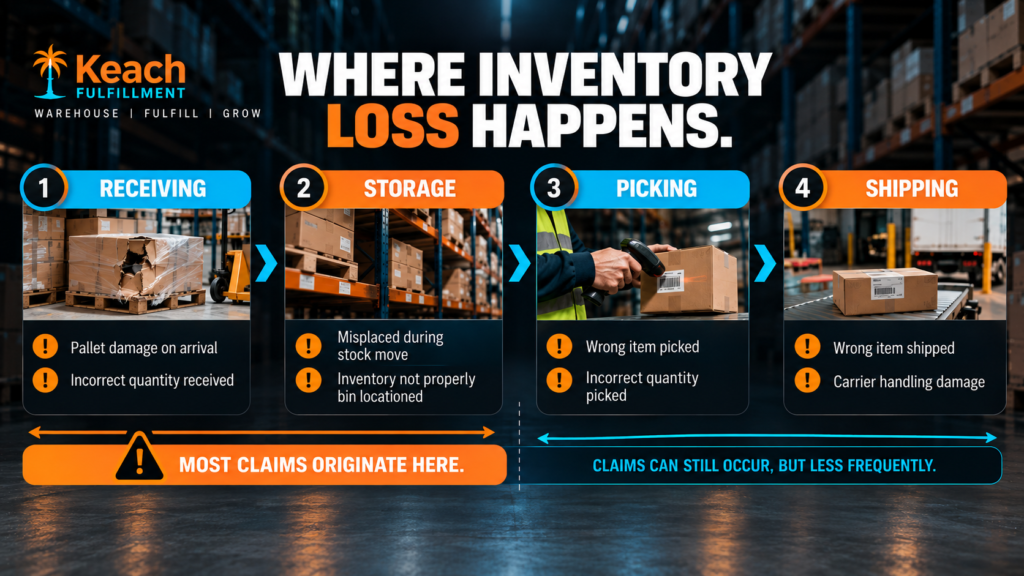
Damage usually shows up in one of three forms, and each one carries a different set of expectations around who absorbs the cost. Visible damage during receiving, where a pallet arrives crushed or a carton is torn. Damage during storage, often from improper stacking, moisture, or pest issues that nobody noticed until the inventory was pulled. And damage during picking or packing, which is rarer but happens when the wrong handling method meets a fragile item.
Loss is a different animal entirely, and it’s the scenario most sellers actually lose sleep over. Sometimes an item is genuinely misplaced and found later during a cycle count. Sometimes it’s shipped to the wrong customer and never recovered. And sometimes it disappears entirely, which is the situation that raises the most questions and prompts the most awkward phone calls between seller and provider.
4 Stages Where Inventory Loss Can Occur
Normal Shrinkage vs. Something Worth Claiming
Inventory shrinkage is a term that gets thrown around loosely in fulfillment conversations, and it’s worth understanding what’s actually normal before you start accusing anyone of losing your stock. Most warehouses operate with a small percentage of variance across a full inventory cycle, and that number varies by product type, packaging, and how frequently items move in and out of the building.
High-volume, small-item SKUs tend to show higher variance than large, palletized goods, while apparel and accessories usually sit somewhere in the middle. Understanding what counts as normal 3PL inventory shrinkage what is normal comes down to comparing your actual discrepancy against the baseline your provider said to expect when the relationship started.
That baseline gets established during the receiving count that happens early on, which is why it helps to know how long 3PL onboarding takes and what the first 30 days involve. The window when your inventory is first counted becomes the reference point every future claim gets measured against, and without it, every discrepancy turns into a debate about what was actually shipped.
Keach Fulfillment tracks every unit from receiving to shipment.
See How We Handle Inventory.Who Actually Pays When Inventory Disappears
The straightforward answer is that liability depends entirely on the contract you signed, which is probably not what anyone wants to hear while staring at a short inventory report. Some agreements place full responsibility on the provider for anything lost or damaged while in their custody, while others cap their exposure at a fixed amount per unit or per pound that often falls far below the actual retail value of the product.
This is where 3PL liability for damaged goods becomes a real conversation rather than a legal footnote buried in an appendix, and it’s also where most sellers realize they never actually read the terms closely enough to understand what they agreed to. A warehouse that caps liability at a low per-pound rate is technically covered, but the practical recovery for a seller shipping high-value electronics or specialty goods can be minimal at best.
The reason this varies so widely across the industry comes down to how different providers structure their risk, and mature 3PL solutions providers are usually happy to explain exactly where they stand rather than hoping the question never comes up. A warehouse handling low-value goods can absorb occasional losses without much trouble, while one handling expensive items either charges higher rates or limits what they’ll cover in writing.
Does 3PL Insurance Cover Lost Inventory?
Insurance is the second layer of protection, and it’s frequently misunderstood by sellers who assume their inventory is automatically covered the moment it enters someone else’s warehouse. Many providers carry general liability coverage, but that protects the warehouse against claims, not your stock against loss, which means the coverage you think exists may not apply to the scenario you’re actually worried about.
The question of whether 3PL insurance covers lost inventory usually comes down to what’s specifically written into the agreement rather than what the provider carries as standard. Some providers offer inventory coverage as an add-on that sellers can purchase, while others expect sellers to carry their own warehouse-to-warehouse policy that covers goods in transit and in storage.
Asking this directly during setup, ideally before the first pallet arrives, prevents a nasty surprise later, and it’s one of those details that naturally gets settled during what to expect when partnering with a 3PL provider for the first time since insurance questions tend to surface during onboarding rather than after a dispute has already started.
Filing a Claim Without Losing Your Mind
When something does go wrong, the provider’s response usually matters more than the paperwork itself. Providers that handle claims well make the process simple and predictable, with clear documentation requirements and reasonable timelines, while providers that don’t will bury you in forms, vague replies, and escalating emails until you either give up or hire someone to fight on your behalf.
Learning how to file a claim for lost stock with a 3PL properly saves weeks of back and forth, because documentation matters more than anything else in these conversations. You document the discrepancy with counts, photos, and shipment records. You submit the claim within the window specified in the contract. The provider reviews and either approves, disputes, or negotiates a settlement.
Knowing where the package was last scanned matters more than people expect, which is why how 3PL shipping optimizes order delivery times and carrier rates becomes relevant here. It helps sellers tell the difference between a package lost in transit and one that never left the warehouse, and that distinction often decides who actually pays.
Choosing a Provider That Takes This Seriously
Most of the pain around lost or damaged inventory traces back to decisions made long before the first order ever shipped, which is why the provider selection process matters more than sellers tend to give it credit for. A provider with clear liability terms, responsive claims handling, and transparent reporting saves an enormous amount of stress down the line.
That’s true for single-channel sellers, and it matters even more for anyone running multiple storefronts where inventory moves between platforms constantly. Choosing the right 3PL provider for omnichannel order fulfillment involves checking how they track inventory across every channel rather than just one, since a provider that keeps clean records everywhere makes discrepancies easier to trace when stock moves between systems.
The 3PL solutions worth considering are the ones that welcome questions about liability and coverage rather than deflecting them, because a provider confident in their tracking system will happily explain exactly how it works and what happens when something goes wrong.
Conclusion: Read the Fine Print Before You Need It
The question of who pays for lost or damaged inventory has an answer, and it’s sitting in your contract right now whether you’ve read it or not. Whether that answer works in your favor depends entirely on decisions made long before any claim arises, which is why the time to care about liability terms is before you sign, not after you’ve lost a pallet.
Keach Fulfillment built its terms around transparency, with clear liability language, documented inventory tracking, and a claims process that doesn’t require a lawyer to navigate. The 3PL solutions here are designed for sellers who’d rather know where they stand than find out during a dispute when there’s no leverage left to negotiate with.
Keach Fulfillment documents every unit and answers claims directly.
Clear terms, clean records, no runaround.