
Most sellers start on one channel. A Shopify store, maybe an Amazon listing, sometimes a marketplace they stumbled into by accident. Then growth happens, orders arrive from three platforms, a wholesale portal, and a social shop nobody expected to work, and fulfillment gets messy in a hurry.
That’s usually when the search for help begins. But omnichannel fulfillment isn’t just single-channel fulfillment multiplied. It’s a different operational problem, and the partner you choose has to understand why.
Why Omnichannel Changes What You Need
Selling on multiple channels is the easy part. Keeping inventory accurate across all of them is where things fall apart. One mis-synced SKU can mean selling the same unit three times in an afternoon, and the refunds plus the apology emails cost more than the sale was worth.
There’s a customer expectation layer too. Someone who buys through your website and returns through a marketplace still expects a seamless experience, and if those two systems don’t talk to each other, the customer feels it before you do. Choosing the right 3PL provider starts with a question that has nothing to do with price. Does this partner genuinely run omnichannel operations, or do they merely tolerate them?
Multichannel vs. Omnichannel: What’s the Difference?
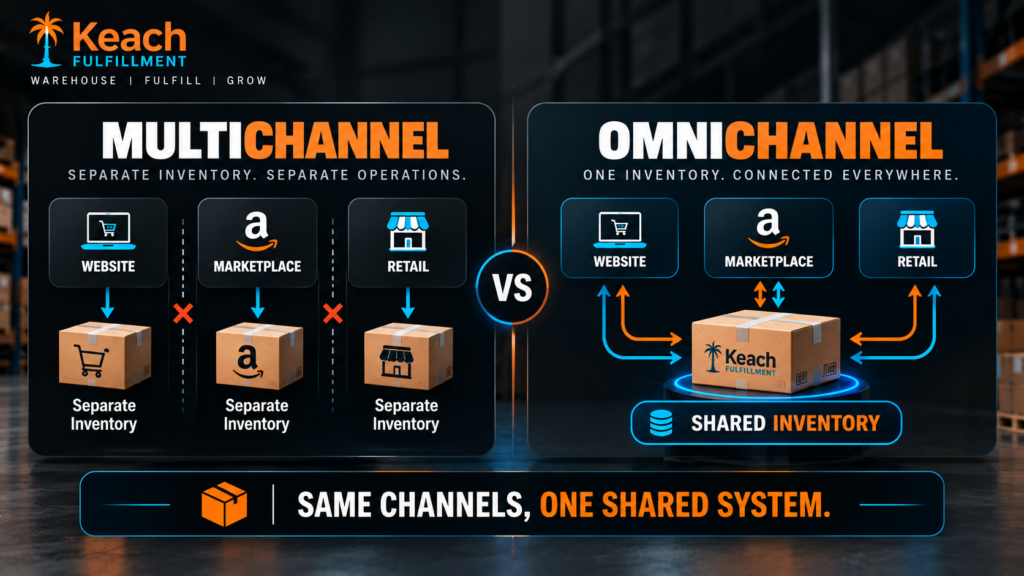
Omnichannel and Multichannel Aren’t the Same Thing
The omnichannel vs. multichannel fulfillment difference trips up plenty of buyers, and it’s worth settling before you compare providers.
Multichannel means you sell in several places. Omnichannel means those places share a single operational backbone, with inventory, orders, and customer data flowing through one system instead of living in separate silos.
The gap shows up in small moments. A customer buys online and returns in store. Stock needs to move between channels without someone reconciling a spreadsheet by hand. A true omnichannel setup handles that automatically. A multichannel setup usually doesn’t, and the difference gets expensive at scale.
It’s also the kind of thing that only becomes obvious once you’re already losing orders to it, which is why reading up on what to expect when partnering with a 3PL provider for the first time before you sign anything saves a lot of backtracking later.
Keach Fulfillment keeps inventory synced across every platform you sell on.
Schedule a consultation.Inventory Sync Is Where Partnerships Break
3PL inventory sync across sales channels sounds like a technical detail until it fails. Then it becomes the only thing you think about.
What you want is a provider whose system updates stock levels in near real time across every channel. Not hourly, not once a day. Real time, or close enough that a burst of orders doesn’t oversell. Some providers claim this and mean nightly batch updates, which is a problem during a promotion.
Ask specifically how their system handles simultaneous orders for the same SKU on different platforms. Not every 3PL provider handles that well, and the ones that don’t tend to reveal it during your busiest week.
Returns Decide Whether Omnichannel Actually Works
Plenty of providers handle outgoing shipments well and fall apart the moment something comes back, which is where the question of whether 3PL support omnichannel returns matters most.
A proper return flow means the item gets received, inspected, restocked, and reflected in inventory across every channel. Without that loop, returns become a manual project, and the inventory numbers drift further from reality with every cycle.
Returns matter even more for subscription brands and apparel, where return rates run high. If the reverse logistics side is weak, the rest of the operation suffers for it.
What Multi-Platform Growth Actually Demands
Once you’re selling on four or five channels, the requirements shift again. You need a partner who can handle different order profiles, different packing requirements, and different carrier needs without treating each channel as an exception.
Finding the best 3PL provider for multi-platform sales growth usually comes down to systems rather than warehouse square footage. A provider with strong software and clear processes scales with you. One that relies on manual workarounds hits a ceiling fast.
Shipping performance sits inside that same conversation, and understanding how 3PL shipping optimizes order delivery times and carrier rates helps you judge whether a provider’s carrier setup will actually hold up as volume grows.
One Warehouse or Several
A central 3PL provider for unified inventory distribution keeps things simple, and simple has real value in the early stages. One location means one set of rules, one inventory pool, and fewer places for mistakes to hide.
As you grow, that may shift. Two or three well-placed warehouses cut transit times and reduce zone-based costs, but they add complexity. The right moment to expand depends on where your customers actually are, not on what sounds impressive in a sales pitch.
Before any of that matters, though, the transition itself has to go smoothly, and knowing how long 3PL onboarding takes and what the first 30 days involve sets realistic expectations for how quickly your operation actually settles. Most brands assume onboarding is a few days of setup, then discover it’s closer to a month of careful work, which changes how they plan the rest of their quarter.
Conclusion: Systems Over Square Footage
Choosing a fulfillment partner for omnichannel selling comes down to one thing. Do their systems hold up when orders come from five directions at once? Keach Fulfillment built its operations around that question, with real-time inventory sync, returns handling that closes the loop, and carrier routing that adapts as your channel mix changes. The right 3PL provider won’t just store your products. They’ll keep the numbers honest across every place you sell.
Keach Fulfillment keeps every channel pointing at the same inventory.
Talk to us now!