
The contract is signed. Now what? Most sellers get to this point with a mix of relief and quiet nerves. Relief because the packing table is finally someone else’s problem. Nerves because handing your inventory to a stranger is a strange feeling, even when you’ve done the research and picked a provider you trust.
What follows is rarely dramatic. It’s a series of practical conversations, some paperwork, and a slow handover of tasks you’ve been doing yourself for years. Knowing what’s coming makes the whole thing feel less like a leap and more like a sequence of steps.
The First Weeks Are Mostly Setup
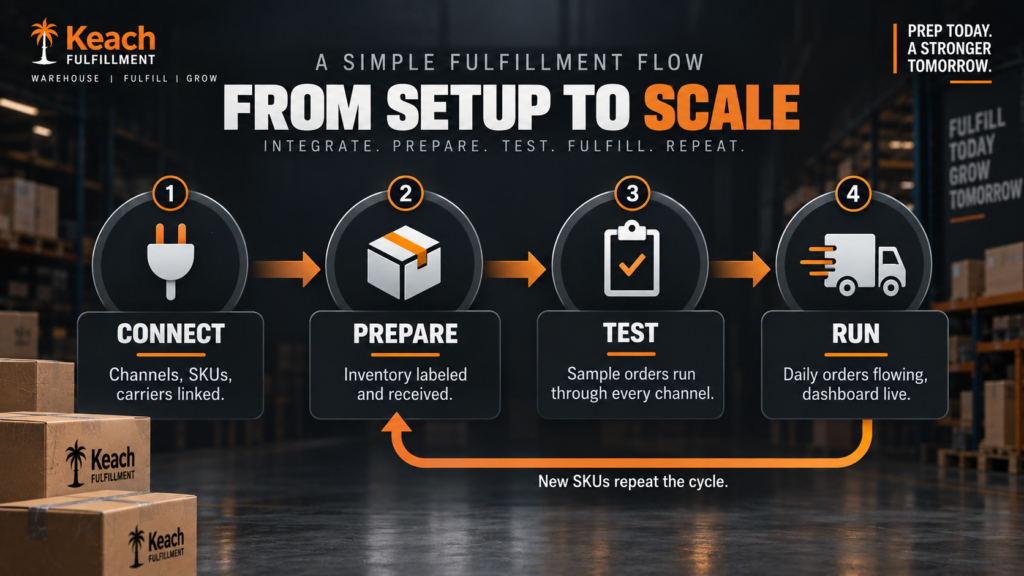
The opening stretch is admin work. Your sales channels get connected to the warehouse system. SKUs get matched to inventory records. Carrier accounts are linked, and shipping rules get configured. Packaging instructions get written down, which is harder than it sounds when the process has only ever lived in your head.
This initial setup process with a new 3PL provider usually takes a few weeks rather than a few days, and it’s worth letting it take time. Every hour spent on data cleanup here saves a phone call later, when a customer is waiting, and a label is printed with the wrong address.
The one thing that reliably slows this stage is messy product data. SKUs that drifted over the years, duplicate entries, items listed under three different names across channels. If you’re preparing for this now, do the cleanup before your inventory ships. You’ll thank yourself.
How to Work With a 3PL Provider for the First Time
Once the systems connect, the day-to-day rhythm settles into something fairly predictable.
Orders flow in from your store. The warehouse picks, packs, and ships them. Tracking numbers travel back to your customers automatically. You watch this happen through a dashboard rather than a packing slip, and for the first week or two, it feels strange to not be physically involved.
The relationship itself works best with clear expectations on both sides. Tell them about your peak seasons before they arrive, not during. Flag new product launches so they can plan shelf space. Give them a heads-up when packaging changes, even if it’s small. Quiet changes cause the loudest problems.
Communication style matters too. Some providers assign you a dedicated account manager. Others use a shared inbox or a support portal. Neither is wrong, but you’ll want to know which one you’re getting before you need it urgently.
The 3PL Onboarding & Fulfillment Flow
Where the Control Question Comes From
Almost every seller asks it at some point. How much control do I lose with a 3PL? The honest answer is less than you’d think, and more than you’d like.
You lose the hands-on part. You’re not choosing which box a product ships in, and you’re not taping it shut. You’re not deciding the order your picker walks the aisles, and you’re not adjusting a label that printed crooked.
You keep everything that shapes the customer experience. Packaging design. Insert cards. Shipping speed tiers. Return policy. Branded tracking pages. Those decisions stay with you, and a good provider treats them as instructions rather than suggestions.
The real shift is in visibility. You go from knowing everything in your head to needing it written down and configured. That’s a trade most brands make happily after the third week.
Keach Fulfillment walks new partners through every stage.
Clear milestones, no vague timelines.Choosing Well Matters More Than Choosing Fast
If you haven’t picked a provider yet, the criteria you use now will shape the next few years. Choosing a reliable 3PL provider for fast order fulfillment comes down to a few things worth checking. Warehouse locations relative to your customers. Carrier relationships and the discounts they actually pass through. Accuracy rates they’re willing to put in writing. How they handle peak season volume without outsourcing to a temporary crew.
Visit the facility if you can. Watch a pick happen. Ask what happens when a SKU runs out mid-batch. The answers tell you more than any sales deck.
One thing worth asking about specifically is onboarding. If you’re wondering how long onboarding takes and what the first 30 days involve, the answer varies by provider, catalog size, and how prepared your inventory is. A provider that can walk you through their timeline in detail is usually one that’s done it many times.
The Day-to-Day Reality After Setup
Once things settle, the work changes shape.
You’ll spend time reviewing performance dashboards instead of packing. You’ll spot a SKU trending low and reorder earlier than you used to. You’ll notice a carrier performing poorly on a specific route and ask about alternatives. None of this is complicated. It’s just different from what you did before.
The first month usually includes one or two small hiccups. A wrong pick, a delayed shipment, a tracking number that didn’t sync. What matters is the response. A provider that acknowledges the issue, fixes it, and explains what changed is telling you exactly how the next few years will go. That’s really the whole lesson. You’re not buying perfection. You’re buying a team that handles problems without needing you in the room.
Conclusion: A Transition, Not a Leap
Partnering with a 3PL provider for the first time feels bigger than it is. Underneath the nerves is a fairly simple process. Connect the systems, prepare the inventory, test the flow, then let it run. Keach Fulfillment built its onboarding for sellers who’d rather know what’s coming than be surprised by it. From the first data check to the first week of live orders, the goal is a transition you barely notice.
Keach handles the setup, the counts, and the first shipments.
Make the first month predictable instead of nerve-wracking.