
Some products can be shipped without much thought. A t-shirt, a phone case, a paperback book. If one gets lost, the loss is annoying but manageable. Insurance covers it, the customer gets a replacement, and everyone moves on.
Then there are the products that keep brand owners up at night. A diamond ring. A limited-edition watch. A custom-built computer. A single shipment going missing costs more than most orders make in a month, and the customer relationship damage goes far beyond the refund. That’s the world of high-value product fulfillment, and it operates on a completely different set of rules than standard shipping.
Understanding what makes high-value fulfillment different, and how to reduce the risks involved, is essential for any brand selling expensive products.
Why High Value Fulfillment Isn’t Standard Shipping
It all comes down to the value. While there may be nothing difficult in replacing a shipment valued at just a couple of hundred dollars, there is no way to replace a shipment that costs thousands of dollars. Therefore, the expectations from such a transaction are different; clients expect that their purchase will be treated with due diligence.
This affects virtually everything related to the process. Firstly, packaging should be solid enough to withstand handling and prevent any sort of tampering. Secondly, carriers should be selected based on their previous experience in delivering high-value shipments rather than their prices. Thirdly, it is essential to have someone confirm the shipment delivery rather than leaving it unattended at the recipient’s doorstep. Finally, it should be well documented to avoid any discussions in case a claim has to be filed.
High-end e-commerce fulfillment is also associated with serving a different type of client. People buying expensive things are usually more exigent, and they are ready to expect their purchases to be delivered in the same way as the products themselves. In fact, when speaking about luxury goods, their delivery is an integral part of the product itself.
Keach Fulfillment handles high-value inventory with the care it requires.
Secure storage, verified delivery, documentation that holds up.The Real Risks High-Value Brands Face
Most brands selling expensive products worry about the same handful of risks, and understanding them makes it easier to plan for them.
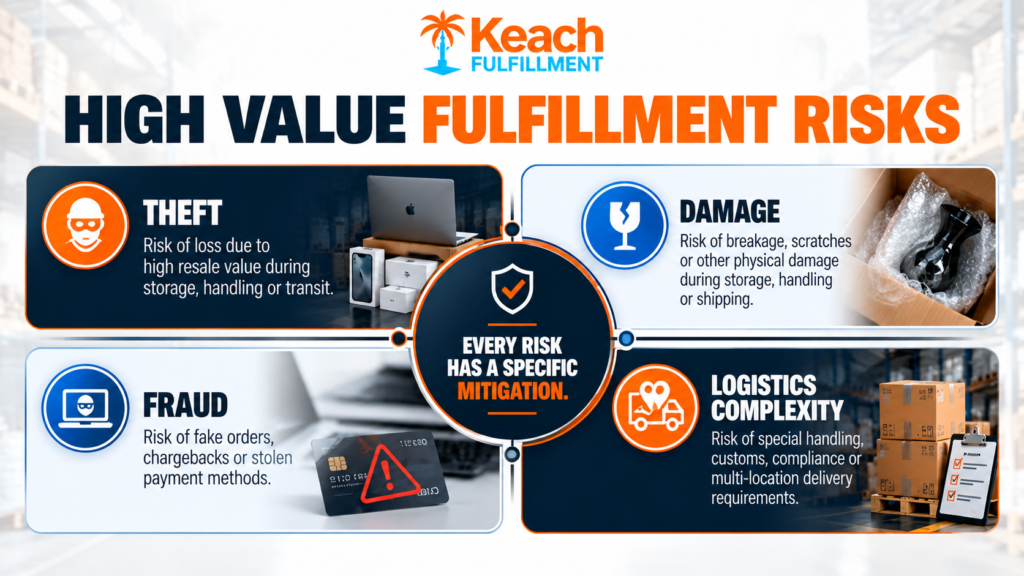
Theft is the most obvious. Packages go missing during transit, from warehouses, or after delivery. A single stolen shipment can wipe out the margin on multiple successful orders.
The second one is damage. Due to mishandling, inappropriate packaging, and tough shipments, products may get damaged on their way even though they were impeccable at the time of leaving the warehouse. In the case of products with a narrow margin of profit or lack of substitute products, damage will bring about a series of issues that would take weeks to sort out.
The last problem is fraud. Purchases of high value draw the attention of fraudsters and bring about numerous issues, including chargebacks and abuse of return policy. A client argues that his or her package had not arrived although it had arrived, or he or she returns some other product.
There is also a logistics complication. The process of secure delivery of luxury products implies extra steps, special handling and storage, and sometimes even additional facilities.
4 High-Value Fulfillment Risks You Need to Control
How High-Value Product Fulfillment Services Reduce Risk
The right fulfillment services address these risks through specific operational choices, not generic “care and attention.”
Secure storage is the first requirement. Valuable goods are kept in restricted locations with fewer access points, surveillance, and frequent inventory taking, as opposed to SKU checking done for regular merchandise. Cages and vaults are used for valuable items at some companies.
The packaging process is standardized. Items are packaged in tamper-proof packaging to ensure no tampering can occur. Packaging materials should be able to withstand impact and moisture. It should also provide the unboxing experience as advertised by the company.
The selection of carriers is more selective. Valuable shipments use the services of carriers that have been tested and proven for reliable deliveries along these routes. Signatures are always mandatory as opposed to being optional. Insurance is always included in the package for every qualifying shipment.
Documentation forms the last level of securing the supply chain. Every process within the chain, from picking the product to its delivery, is documented. This documentation will be key in resolving any disputes arising out of the transaction. That documentation matters just as much as the physical security, because most claims don’t fail on the facts. They fail on the evidence.
Preventing Theft in High-Value Order Fulfillment
The question of how to prevent theft in high-value order fulfillment comes up constantly because it’s the risk that keeps brand owners awake at night. There’s no single solution, but there are several practices that dramatically reduce the likelihood.
Access control is the foundation. Only specific staff members can handle high-value inventory, and their movements are tracked. Inventory counts happen daily rather than monthly. Discrepancies get investigated immediately rather than logged for later.
Shipping patterns should be unpredictable. If carriers always pick up high-value orders at the same time on the same day, that pattern can be learned. Varying the schedule and the packaging makes shipments harder to target.
Customer-side security matters too. Deliveries requiring signature prevent porch theft. Tracking links that don’t advertise the value of the package help. Some brands use nondescript packaging to avoid signaling that something expensive is inside. A fulfillment center for jewelry and electronics usually has all of this built into the standard process, since those categories attract the most attention from thieves.
Where High Value Fulfillment Connects to Broader Operations
High-value fulfillment rarely happens in isolation. Brands selling expensive products usually deal with several related challenges at the same time, and the fulfillment setup has to handle all of them.
Some products need special handling that goes beyond security. Knowing what white glove fulfillment is and which products need it clarifies when delivery includes in-home placement or setup, which is common for luxury furniture, high-end appliances, and premium electronics. The same customer who bought a $5,000 item expects the delivery experience to match the price.
Large items create their own challenges. Learning what oversized product fulfillment is and how it works helps brands plan for products that don’t fit standard shipping channels, whether that’s furniture, equipment, or anything else above typical parcel dimensions.
And then there are the situations where something goes wrong after the sale. Understanding how fulfillment centers handle product recalls matters because a recall on a high-value product becomes a reverse logistics project that requires the same care as the original delivery. Tracking every unit and managing the retrieval process correctly protects both the brand and the customers.
Aligning Fulfillment Solution with the Product
Every valuable product does not necessarily require the same kind of security procedures. It is evident that there exists quite a difference between the $500 priced handbag and $50,000 worth of watches and, hence, there must be a difference in their fulfillment processes as well.
There are just three issues to consider when determining this matter. What is the cost per unit? How costly will the replacement be in case of failure? And what are the customers’ expectations regarding their delivery?
Higher value per unit justifies more security. Higher replacement cost justifies more insurance. Higher customer expectations justify more presentation. Getting the balance right means neither over-engineering the process nor leaving the brand exposed.
Conclusion: Care Matches the Cost
High-value product fulfillment isn’t just standard shipping with extra insurance. It’s a different operational mindset, where every step is designed around the value of what’s being moved. Brands that get this right protect both their margins and their reputations. Brands that treat high-value orders like regular ones eventually learn the difference the hard way.
Keach Fulfillment handles high-value inventory with the processes it requires, from secure storage to verified delivery to documentation that holds up when claims get filed. Whether you’re shipping jewelry, electronics, or anything else with real value attached, the fulfillment services here are built around protecting what matters.
We protect high-value inventory at every step.
Talk to Keach About High-Value Fulfillment.