
Most business owners think logistics is simply about moving products from one place to another. Inventory sits in a warehouse, an order comes in, a package gets shipped, and the process ends there.
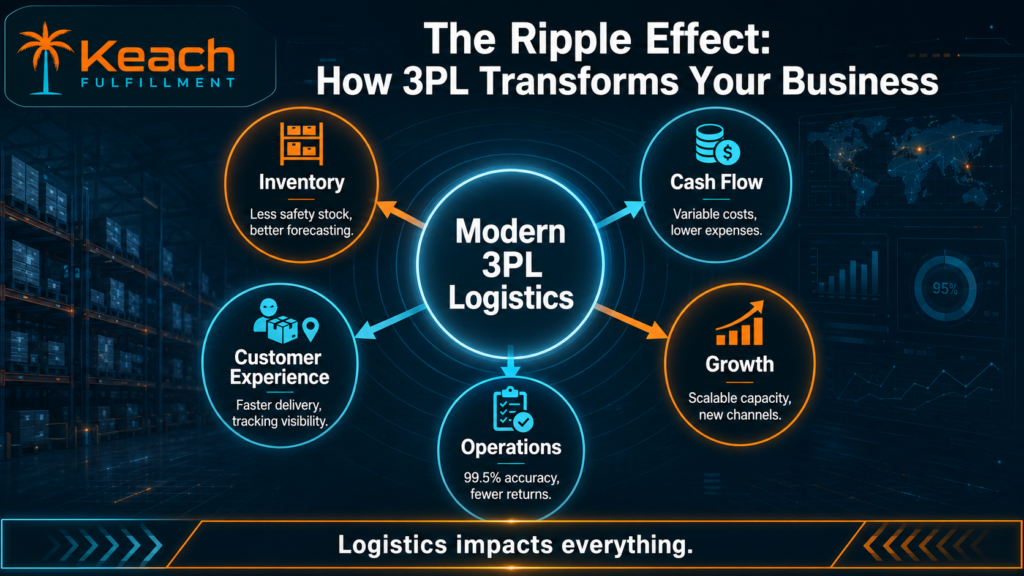
In reality, modern 3pl logistics influences nearly every aspect of your business. The way inventory is managed affects cash flow. Shipping performance impacts customer satisfaction. Warehouse operations influence profitability. Even growth strategies often depend on how efficiently your supply chain functions.
When you start viewing logistics as a strategic business function rather than a shipping expense, you begin making better decisions about partnerships, processes, and long-term growth.
Discover how modern 3PL transforms your entire business.
Contact us todayHow Does 3PL Logistics Affect Your Inventory?
One of the biggest yet most overlooked impacts of logistics 3pl services is inventory management. Inventory ties up cash, occupies storage space, and directly affects your ability to meet customer demand. When logistics operations are inefficient, businesses often compensate by carrying excess stock.
Many companies hold large amounts of safety stock because they lack confidence in their supply chain visibility. They order more products than necessary because they are unsure what is available, where it is stored, or how quickly it can be replenished. As a result, valuable cash remains trapped on warehouse shelves rather than being invested in growth initiatives.
Professional 3pl logistics services provide real-time inventory visibility. Instead of relying on estimates and spreadsheets, businesses gain access to accurate data about stock levels, product movement, and sales velocity. With reliable information, inventory decisions become more precise, reducing overstocking while maintaining healthy product availability.
The benefits extend beyond inventory control. Modern 3PL providers also help improve forecasting by identifying seasonal trends, purchasing patterns, and demand fluctuations. Better forecasting leads to smarter purchasing decisions, reduced carrying costs, and healthier cash flow.
What Is the Role of Logistics Consulting?
Many growing businesses eventually discover that operational challenges are not always caused by poor execution. Sometimes the entire supply chain is structured inefficiently from the beginning.
This is where logistics consulting becomes valuable.
A logistics consultant evaluates your current supply chain, identifies inefficiencies, and recommends improvements that reduce costs while improving service levels. Often, the savings generated by a few strategic changes far exceed the cost of the consultation itself.
For example, a consultant may determine that your inventory is stored too far from your primary customer base. Relocating products to a more strategic warehouse location can reduce shipping costs while improving delivery times.
In other cases, consultants uncover hidden expenses caused by packaging choices. Oversized boxes frequently trigger dimensional weight charges that increase shipping costs on every order. A simple packaging adjustment can generate significant long-term savings.
Carrier selection is another area where expert guidance makes a difference. Every shipping carrier performs differently depending on package size, destination region, and service level requirements. A logistics consultant helps businesses choose the most efficient mix of carriers based on actual shipping data.
For many ecommerce brands, logistics consulting provides access to specialized expertise without the cost of hiring a full-time supply chain manager.
Expert consulting identifies savings you might miss.
Explore ConsultingHow Does 3PL Improve Customer Experience?
Many businesses focus heavily on website design, advertising, and product quality when thinking about customer experience. While those factors matter, the delivery experience often has the greatest influence on how customers remember your brand. The quality of your 3pl logistics partner directly affects that experience.
Orders fulfilled from strategically located warehouses reach customers faster. Instead of waiting a week or more, customers often receive products within a few days. Faster delivery increases satisfaction and encourages repeat purchases.
Packaging quality matters just as much. Professional fulfillment teams use properly sized boxes and appropriate protective materials to reduce shipping damage. Products arrive in excellent condition, creating a positive first impression and minimizing costly returns.
Visibility throughout the delivery process also plays a significant role. Modern 3PL providers offer automated tracking updates that keep customers informed at every stage. Rather than wondering where their package is, customers receive clear communication and accurate delivery estimates.
Returns management is another critical component. Efficient 3pl logistics services process returns quickly, allowing customers to receive refunds or replacements without unnecessary delays. When the final interaction with your brand is smooth and hassle-free, customers are far more likely to return in the future.
What Financial Benefits Do Modern 3PLs Provide?
While many businesses initially consider outsourcing logistics to reduce shipping costs, the financial impact of a modern 3PL extends much further.
One major advantage is the shift from fixed costs to variable costs. Instead of paying warehouse rent, utilities, equipment expenses, and employee salaries regardless of sales volume, businesses pay based on actual fulfillment activity. This creates greater flexibility, especially during slower periods.
Modern 3PL providers also negotiate volume shipping rates that individual businesses typically cannot access. Because fulfillment companies ship thousands of packages every day, they receive significant discounts from carriers and pass much of those savings on to their clients.
Operational accuracy provides another source of savings. Every fulfillment error creates additional expenses, including return shipping, replacement products, labor costs, and customer dissatisfaction. Professional providers often maintain order accuracy rates above 99.5%, dramatically reducing these costly mistakes.
Businesses also eliminate the expense of maintaining their own warehouse space. Garages, spare rooms, and leased facilities can be reclaimed while inventory is managed by professionals who specialize in storage and fulfillment operations.
If you’ve already explored the outsourcing decision itself, our previous guide, 3PL Fulfillment Explained: When to Outsource and When to Keep It In-House, provides a helpful framework. Once that decision has been made, the broader operational and financial advantages of a modern 3PL become much easier to see.
How Do You Measure 3PL Success?
Choosing a fulfillment partner is only the beginning. To ensure the relationship continues delivering value, businesses should track a set of core performance metrics.
Order accuracy is one of the most important indicators. Leading providers consistently achieve accuracy rates above 99.5%, ensuring customers receive the correct products every time.
On-time delivery performance measures how consistently shipments arrive within promised timeframes. Strong fulfillment partners maintain delivery compliance rates of 98% or higher.
Inventory accuracy is equally critical. This metric compares actual inventory counts to system records. High-performing providers maintain inventory accuracy levels above 99%, reducing stock discrepancies and fulfillment disruptions.
Returns processing time also deserves close attention. Faster returns processing improves customer satisfaction and accelerates refund cycles.
Finally, businesses should monitor cost per order. As order volume grows, fulfillment efficiency should improve, driving down the average cost associated with each shipment.
Wrap Up
Modern 3pl logistics is about much more than shipping boxes. The right provider becomes a strategic partner that improves inventory management, enhances customer experiences, strengthens financial performance, and supports long-term growth.
Professional logistics 3pl services create visibility across your supply chain, while logistics consulting helps uncover opportunities for efficiency and cost savings. Together, these services transform logistics from an operational necessity into a competitive advantage.
At Keach Fulfillment, we provide comprehensive 3pl logistics services designed specifically for growing ecommerce brands. From fulfillment operations to strategic logistics consulting, our team helps businesses optimize every stage of the supply chain while delivering fast, accurate service that customers love.
Let our logistics expertise transform your operations.
Contact Keach Fulfillment