
Imagine this. A customer places an order for your most popular product. You go to pick it, but the shelf is empty. Your system still shows five units available. Where are they? Did they sell? Were they damaged? Did they ever actually arrive?
This scenario plays out in warehouses and spare bedrooms every single day. The culprit is almost always the same. A lack of reliable tracking.
When you do not have a clear picture of your inventory, everything becomes harder. You oversell products you do not have. You waste time hunting for misplaced items. You lose trust with customers who expect accuracy.
A solid inventory tracking system solves these problems. It gives you visibility into what you own, where it is, and when it moves. For 3pl logistics ecommerce brands, this visibility is not a luxury. It is essential.
That brings clarity to your operations.
Let’s explore the tools and approachesWhat Makes an Inventory Tracking System Essential
At its core, an inventory tracking system is simply a way to monitor your stock. But the best systems do much more than count boxes. They connect to your sales channels, update automatically, and give you real time visibility across your entire operation.
Without this visibility, you are flying blind. You might think you have plenty of a product when you are actually days away from a stockout. You might believe an item is ready to ship when it is still sitting on a receiving dock waiting to be processed.
For ecommerce businesses, accuracy matters more than ever. Customers expect to see real-time availability. They expect their orders to ship quickly. They expect to receive exactly what they ordered. A good tracking system makes all of this possible.
Types of Inventory Tracking Software
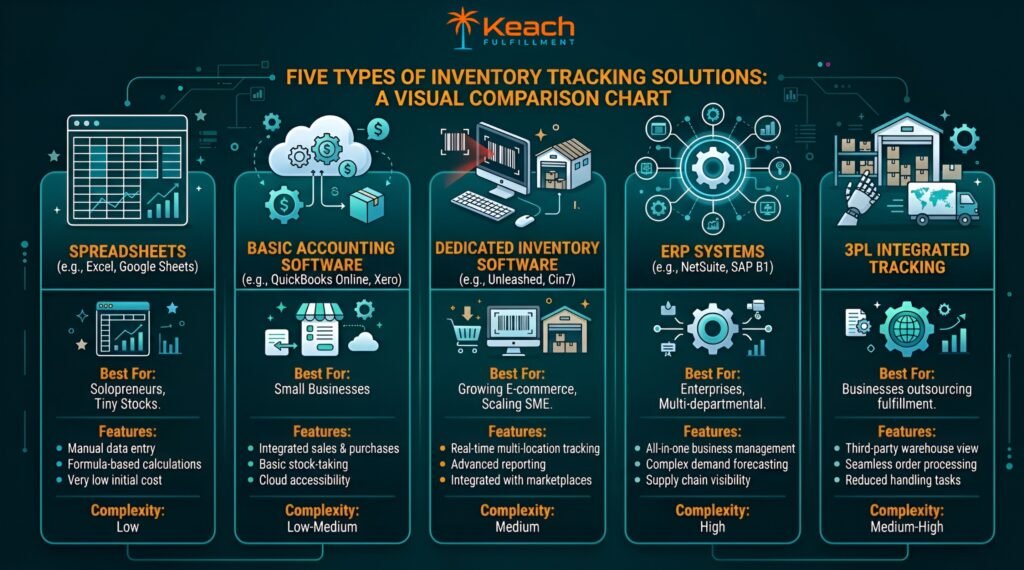
Different businesses need different solutions. Here is a look at the main categories of inventory tracking software and who they work best for.
Spreadsheets: For very small businesses with simple needs, spreadsheets can work. You list your products, log incoming shipments, and subtract sales manually. The cost is low, but the labor is high. Errors creep in. Updates get missed.
Basic accounting software with inventory features: Platforms like QuickBooks or Xero offer basic tracking. They work well for businesses with limited SKUs and simple operations. But they are not designed for complex ecommerce needs like multi-channel selling or warehouse management.
Dedicated inventory management software: This category includes tools like Skubana, Cin7, or Fishbowl. They offer robust features including multi channel integration, purchase order management, and reporting. They are ideal for growing businesses that have outgrown basic tools.
Enterprise resource planning systems: For large businesses, ERP systems like NetSuite or SAP provide comprehensive tracking across inventory, finance, and operations. They are powerful but expensive and complex to implement.
3PL integrated tracking: When you work with a fulfillment partner, their warehouse inventory tracking system becomes your system. You get access to real-time data without managing software yourself.
| Tracking Solution | Best For | Key Limitation |
|---|---|---|
| Spreadsheets | 0 to 50 monthly orders | Manual work, error-prone |
| Basic Accounting Software | 50 to 200 monthly orders | Limited ecommerce features |
| Dedicated Inventory Software | 200 to 2000 monthly orders | Requires setup and management |
| ERP Systems | 2000+ monthly orders | Expensive, complex implementation |
| 3PL Integrated Tracking | Any scale, outsourced fulfillment | Less direct control over the system |
The Power of Real-Time Inventory Tracking
One of the biggest shifts when you move from basic to professional tracking is gaining real time inventory tracking. This means your system updates instantly whenever a sale happens, a return is processed, or new stock arrives.
Real-time visibility changes how you run your business. You can see your actual available stock at any moment, not a number from yesterday. You can set up alerts that notify you when products fall below reorder points. You can make purchasing decisions based on current data, not last week’s spreadsheet.
For customers, real-time tracking means accurate availability on your website. No more ordering a product only to receive a “sorry, out of stock” email later. That experience damages trust. Real-time data prevents it.
Key Features to Look for in Ecommerce Inventory Tracking
When evaluating solutions, certain features matter more than others. Here is what to look for.
Multi-channel synchronization: If you sell on Shopify, Amazon, and in a retail store, your tracking system needs to pull data from all channels. Without synchronization, you risk overselling across platforms.
Barcode scanning: Manual data entry leads to errors. Barcode scanning speeds up receiving, counting, and picking while improving accuracy. Look for systems that support handheld scanners.
Reorder point alerts: Your system should notify you when stock levels hit predetermined thresholds. This prevents stockouts by prompting you to order before you run out.
Reporting and analytics: Good tracking software helps you understand sales velocity, seasonal trends, and inventory turnover. These insights inform better purchasing decisions.
Integration capabilities: Your tracking system should connect with your ecommerce platform, accounting software, and any other tools you use. Disconnected systems create data silos and extra work.
How Accurate Tracking Supports Better Forecasting
Accurate ecommerce inventory tracking is the foundation for everything we discussed in our previous guide on forecasting. You cannot predict future demand if you do not trust your current numbers.
When your tracking is reliable, you know exactly how fast each product moves. You can calculate accurate lead times. You can identify seasonal patterns with confidence. This data makes your forecasting precise instead of guesswork.
A good tracking system also helps you spot problems early. If a product suddenly stops moving, you see it in the data. If returns are spiking, you notice the trend. These insights let you take action before small issues become big problems.
Accurate tracking feeds accurate forecasting. If you missed our guide on using data to predict demand and prevent stockouts, check it out to see how tracking and forecasting work together for smoother operations.
Common Mistakes in Warehouse Inventory Tracking
Even with good software, mistakes happen. Here are a few common ones to avoid.
Not training staff properly. A system is only as good as the people using it. Make sure everyone who touches inventory understands the process. One person bypassing scanning creates holes in your data.
Skipping cycle counts. Regular physical counts catch discrepancies that software might miss. Even with great tracking, occasional verification is essential.
Ignoring negative inventory. Some systems let you sell products you do not have, creating negative inventory numbers. This is a red flag. Investigate and fix it immediately.
Letting returns fall through the cracks. Returned items need to be inspected and logged back into inventory. If you skip this step, your system shows less available stock than you actually have.
Takes the complexity out of inventory management.
Let’s talk about how professional fulfillmentWhen to Consider a 3PL for Inventory Tracking
There comes a point where managing your own tracking system becomes more burden than benefit. You might have a great software platform, but you still spend hours reconciling data, chasing discrepancies, and training staff.
This is when outsourcing to a third-party logistics provider makes sense. A 3PL like Keach Fulfillment handles all the tracking for you. Their warehouse inventory tracking is built into their operations. You log into a dashboard and see your real-time counts without managing any software yourself.
The provider handles receiving, storage, picking, and shipping. Each step is scanned and logged automatically. You get the visibility you need without the operational overhead.
For many ecommerce brands, this shift is transformative. Instead of spending hours on inventory management, you spend those hours on marketing, product development, and customer relationships.
Putting It All Together
Inventory tracking might not be the most exciting part of running an ecommerce business, but it is one of the most important. Without it, you are constantly guessing. With it, you gain clarity, confidence, and control.
The right solution depends on your size, complexity, and goals. Start where you are. Use tools that fit your current needs. As you grow, invest in systems that scale with you. And remember that outsourcing to a professional fulfillment partner is always an option if managing your own tracking becomes overwhelming.
At Keach Fulfillment, we build accurate tracking into everything we do. From receiving to storage to shipping, every step is scanned, logged, and visible to you in real time. You get the data you need without the operational burden.
Let’s build a system that gives you clarity and peace of mind.
Reach out today!