
Your customer clicked “buy now” and paid. They’re happy, right? Not yet. The transaction is just the beginning. What happens in the next 24-48 hours during ecommerce order processing determines whether they become loyal repeat customers or leave disappointed reviews, warning others away from your store.
Most ecommerce founders obsess over conversion optimization, ad spend, and product selection. Those matters. But the gap between purchase and delivery is where customer experience either solidifies or shatters. Processing speed, accuracy, communication, and problem resolution during this window create lasting impressions that conversion rates and compelling product photos can’t fix after the fact.
Customers judge your entire brand based on whether the right product arrives quickly and undamaged. Fair or not, operational excellence during fulfillment defines their perception of your business more than your marketing ever will.
We’ll show you how systematic fulfillment builds customer loyalty.
Talk to our team about upgrading your operations.The Hidden Customer Experience Journey
From a customer’s perspective, the ecommerce order workflow is mostly invisible. They order, they wait, they receive. What happens between ordering and receiving determines whether waiting feels reasonable or frustrating.
Immediately after purchase, customers expect order confirmation. This seems basic, but automated confirmation emails set expectations and provide reassurance that their money went somewhere legitimate. Absence of rapid confirmation triggers anxiety that something went wrong.
Within 24 hours, customers want shipping confirmation. This notification signals progress. The order isn’t lost in the void; it’s actually moving toward them. The tracking number provides a sense of control. They can monitor progress even if there’s nothing they can actually do to speed delivery.
During transit, proactive communication about delays or issues differentiates professional operations from amateur ones. Customers tolerate problems better when informed. They get angry when kept in the dark.
Upon delivery, the unboxing experience creates the final judgment. Was the packaging professional or sloppy? Did products match descriptions? Was everything included? Damage during shipping reflects poorly on the seller regardless of the carrier’s fault.
Each stage in this journey connects to order processing systems and operational decisions. Speed, accuracy, communication quality, and problem handling all stem from how order processing is structured and executed.
Speed: The New Baseline Expectation
Amazon Prime trained an entire generation to expect orders within two days. Like it or not, that speed became the standard customers use to judge everyone else.
Your online order processing timeline directly affects perceived service quality. Orders shipping same-day or next-day feel fast and professional. Orders taking 3-5 days to process before even shipping feel slow, regardless of actual shipping speed, once packages leave the warehouse.
The operational difference between next-day and three-day processing often comes down to systems and staffing rather than physical limitations. Automated order flow from ecommerce platforms to warehouse management systems enables rapid processing. Manual systems requiring staff to download orders, print pick lists, and manually update inventory create delays.
Processing speed also affects problem resolution. When errors occur, fast operations can fix and reship quickly. Slow operations compound mistakes with additional delays.
Customers rarely complain about fast service. They frequently complain about slow processing even when final delivery meets promised timelines. Speed creates goodwill that covers minor issues; slowness erodes trust even when everything works correctly.
Accuracy: The Non-Negotiable Factor
Processing speed means nothing if wrong products arrive. Accuracy in ecommerce order processing determines whether customers receive what they paid for, which sounds obvious but gets overlooked when rushing through high volumes.
Wrong items create multiple bad experiences. First, customers are disappointed receiving something they didn’t order. Second, they face the hassle of initiating returns. Third, they wait for additional time for the correct items. Fourth, the entire incident damages trust in your brand’s competence.
Accuracy problems often trace to inadequate verification during picking and packing. Visual-only item selection leads to mistakes when products look similar. Picking wrong sizes, colors, or product variants is common without barcode verification, forcing accuracy checks.
Quality control before sealing packages catches errors. Professional order processing systems include verification steps where staff confirm picked items match order details before packing. This checkpoint prevents most accuracy problems from reaching customers.
Packing errors also affect perceived accuracy. Forgetting to include all items in multi-product orders creates partial fulfillment problems. Missing accessories or components that should accompany the main products trigger customer service issues even when the primary item is correct.
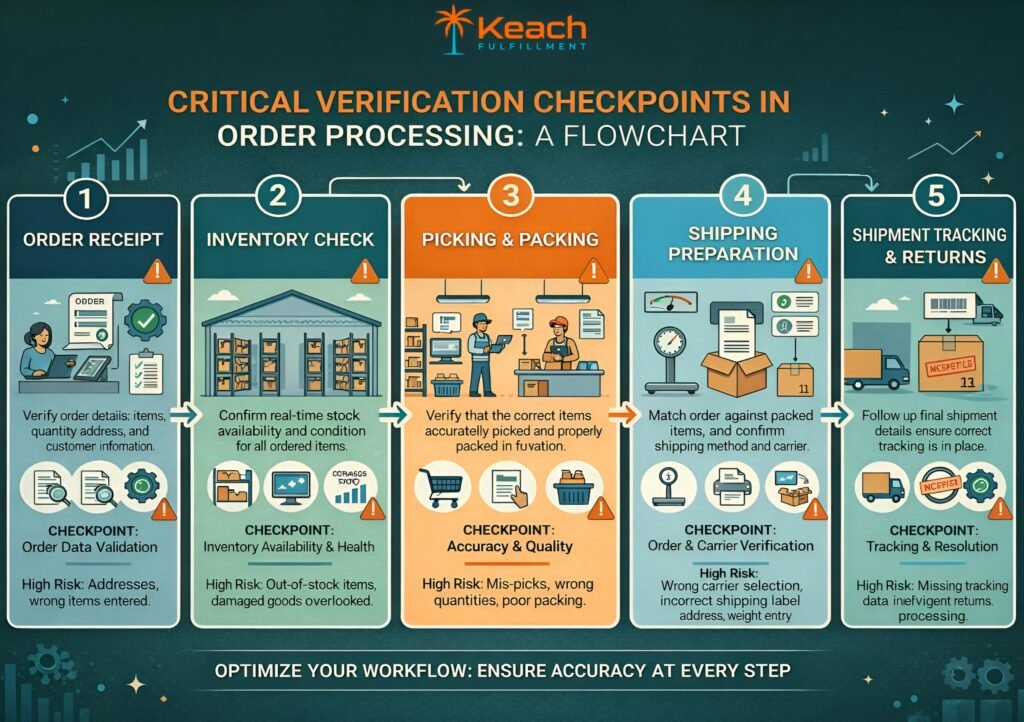
Communication: Managing Expectations Throughout
Proactive communication during the ecommerce order workflow transforms waiting from anxiety into anticipation.
Order confirmations set the stage. These emails should arrive within minutes of purchase, include order details for verification, provide expected fulfillment timelines, and offer contact information for questions. Customers want reassurance that their transaction was completed successfully.
Shipping notifications signal progress. These updates should include tracking numbers that actually work (sounds obvious, but broken tracking links are surprisingly common), realistic delivery estimates based on carrier service levels, and clear information about how to track shipments.
Delay notifications separate professional operations from amateur ones. When problems arise, causing delays, proactive communication before customers ask shows respect and maintains trust. Customers tolerate delays better when informed than when kept guessing.
Delivery confirmations close the loop. Knowing packages arrived successfully provides peace of mind and reduces “where’s my order” inquiries that consume customer service time.
The best order management systems automate these communications through integration with ecommerce platforms and shipping carriers. Manual communication processes break down under volume, creating inconsistent customer experiences.
Problem Resolution: Where Loyalty Gets Earned
Perfect order processing is impossible. Products get damaged in shipping. Carriers lose packages. Warehouse staff occasionally make mistakes despite verification systems. How these problems get handled determines whether customers give you another chance or never return.
Fast acknowledgment matters first. When customers report issues, an immediate response creates confidence that the problem will be resolved. Delayed responses suggest the complaint is being ignored or deprioritized.
Empowered staff who can actually resolve issues without escalation of bureaucracy create smooth experiences. Requiring customers to explain problems to multiple people or wait for manager approval extends frustration.
Solutions that exceed basic requirements earn goodwill. Offering expedited replacement shipping at no charge, including small extras as apology gestures, or providing partial refunds for inconvenience turn negative situations into relationship-building opportunities.
The order processing system infrastructure affects resolution speed. If tracking shows orders as delivered but customers claim non-receipt, systems providing proof of delivery or carrier GPS data help investigate quickly. If quality issues occur, photos and descriptions in order records help verify problems and process returns efficiently.
| Processing Element | Impact on Experience | Common Failure Points | Customer Perception |
|---|---|---|---|
| Order Confirmation | Sets expectations | Delayed or missing emails | Anxiety about the transaction |
| Processing Speed | Creates service perception | Manual workflows, staffing gaps | Slow = unprofessional |
| Picking Accuracy | Prevents wrong items | Visual-only verification | Mistakes = incompetence |
| Packing Quality | Prevents damage | Inadequate protection | Carelessness with products |
| Communication | Manages expectations | No proactive updates | Left in the dark |
| Problem Resolution | Builds or destroys loyalty | Slow response, bureaucracy | Care level for customers |
Technology’s Role in Customer Experience
Modern online order processing depends on technology infrastructure that customers never see but directly benefit from.
Integration between ecommerce platforms and warehouse systems enables automatic order flow. Orders appear in fulfillment systems within minutes of customers placing them, eliminating processing delays from manual downloads or batch uploads that might happen once or twice daily.
Inventory synchronization prevents overselling. When products sell out, availability updates across all sales channels in real-time. Customers never order items that don’t exist, avoiding the terrible experience of purchase followed by cancellation notification.
Barcode scanning throughout picking and packing creates verification checkpoints, preventing wrong-item shipments. Technology forces accuracy that visual checks alone can’t maintain consistently.
Shipping carrier integration enables automatic rate shopping, selecting the best balance of speed and cost for each order’s destination and urgency. Customers benefit from appropriate carrier selection without you manually deciding for each order.
Tracking integration pushes shipping updates to customers automatically. Nobody manually enters tracking numbers or sends notification emails. The system handles communication, ensuring consistency and timeliness.
The Ripple Effect on Business Metrics
Customer experience during order processing doesn’t exist in isolation from business performance. The connection between operational quality and financial results is direct.
Return rates decrease when accuracy improves. Fewer wrong items mean fewer returns to process, which saves fulfillment costs and reduces customer service workload.
Repeat purchase rates increase when customers receive products quickly and accurately. Positive fulfillment experiences build trust that encourages ordering again.
Customer lifetime value rises as operational excellence turns one-time buyers into repeat customers. The margin difference between acquiring new customers and retaining existing ones is significant.
Review ratings improve when order processing works well. Fast shipping and accuracy generate positive feedback. Slow processing and errors create negative reviews that affect conversion rates for future potential customers.
Customer service costs decrease when fewer issues arise. Time spent handling complaints about delays, wrong items, or damaged products could be redirected to proactive service or eliminated through efficient operations.
Let’s audit your current workflow and identify improvement opportunities.
We’ll show you where operational changes create customer experience gains.Common Processing Mistakes That Hurt Experience
Many ecommerce businesses damage customer experience through preventable operational mistakes.
Overselling due to a lack of inventory synchronization creates the worst customer experience: a successful purchase followed by cancellation notification because products don’t actually exist. This failure point often stems from platforms not connected to real-time warehouse inventory.
Delayed processing from manual workflows means orders sit for days before anyone picks and packs them. Customers see “order placed” status without progress, assuming nothing is happening.
Poor packaging using inadequate protection leads to damaged products. Customers blame the seller regardless of the carrier’s mishandling during shipping.
Missing communication about delays leaves customers guessing. When processing takes longer than expected, or carriers experience delays, proactive notification prevents frustrated inquiries.
Difficult returns processes turn fixable problems into permanent customer losses. Complicated return procedures or slow refund processing after returns arrive create additional frustration beyond the initial issue.
Inconsistent quality when some orders ship perfectly, and others have problems, creates unpredictable experiences. Customers can’t recommend businesses where service quality varies wildly.
Building Operational Excellence
Improving customer experience through better ecommerce order processing requires systematic approaches, not just good intentions.
Invest in proper technology infrastructure connecting all systems. Ecommerce platforms should integrate directly with warehouse management systems and shipping carriers. Real-time data flow prevents delays and enables automation.
Implement verification procedures at critical points. Barcode scanning during picking and quality checks before packing catches most errors before they reach customers.
Staff training on quality standards creates consistency. Everyone should understand that accuracy and speed both matter, with clear procedures for handling each order type.
Performance monitoring tracks metrics that indicate customer experience. Order accuracy rates, processing time, shipping speed, and return rates provide objective measures of operational quality.
Continuous improvement processes identify problems and implement solutions systematically rather than reactively. Regular review of customer complaints reveals patterns suggesting specific operational changes.
What Success Looks Like
When order processing works correctly, customer experience metrics improve measurably.
Order accuracy rates above 99% mean virtually every customer receives correct items. The rare exceptions get handled quickly through efficient problem resolution.
Processing times averaging 24 hours or less create a perception of responsive, professional service. Orders placed today ship tomorrow.
Customer satisfaction scores rise as operational excellence becomes consistent. Positive reviews mention fast shipping and accuracy.
Repeat purchase rates increase because customers trust that the fulfillment experience will match their positive first order.
Customer service inquiry volume decreases because fewer problems occur. Time saved handles growth without proportionally increasing support staff.
Understanding how every operational decision during ecommerce order processing directly impacts customer experience helps prioritize improvements that actually matter. The connection between fulfillment quality and customer loyalty is immediate and measurable. At Keach Fulfillment, we’ve spent eight years refining order management systems and ecommerce order workflows to create customer experiences that build brands rather than just moving boxes. Professional order processing isn’t just logistics; it’s customer experience delivery that happens to involve warehouses and shipping carriers.