
Entrusting your inventory to a 3PL service provider can be quite a huge decision. You entrust them with not only your merchandise but also your customer base and reputation as well. The service agreement that you enter into will lay down the terms.
Most sellers skim the agreement. They focus on rates. They ignore the clauses that matter when something goes wrong. Then a shipment gets lost. A fee appears out of nowhere. They realize too late what they agreed to. Reading the contract carefully protects you. Understanding the key terms prevents surprises.
Why the Contract Matters More Than the Sales Pitch
Sales calls are designed to impress. The representative highlights strengths. They downplay limitations. They promise flexibility.
The contract tells a different story. It lists what the provider is obligated to do. It defines what happens when things go wrong. It specifies the fees you will pay for every service. A good 3rd party logistics wants you to understand the terms. They answer questions openly. A bad provider rushes you through. They hope you will not notice the details.
Start With the Pricing Structure
Pricing is where most sellers focus their attention. It is also where hidden costs often hide.
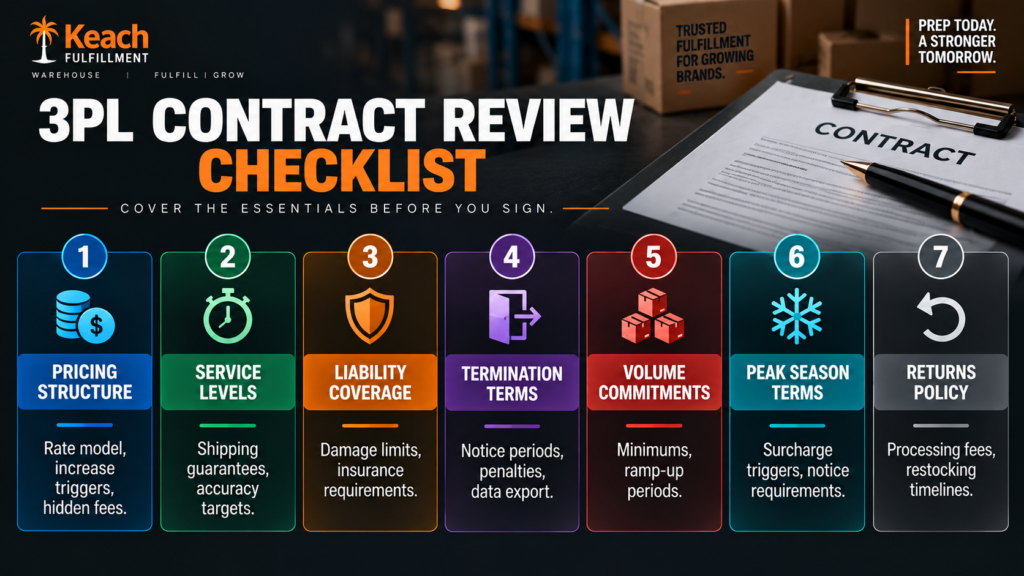
Ask whether fees are flat rate or per item. A flat rate covers a single order regardless of how many items are in the box. Per-item pricing charges for each unit picked and packed. Each model suits different order profiles.
Ask what triggers additional charges. Receiving fees. Storage minimums. Peak season surcharges. These add up quickly if you are not prepared.
Ask how often rates can increase. Some contracts allow quarterly adjustments. Others lock rates for a year. Know what you are agreeing to.
Service Level Agreements and Guarantees
A service level agreement defines what the provider promises. It covers shipping speed, accuracy rates, and response times.
Without clear SLAs, accountability disappears. If the provider ships late, what happens? If they pick the wrong item, who pays? The contract should answer these questions. Look for guarantees with teeth. Credits for missed targets. Penalties for repeated errors. A provider confident in their service will agree to these terms.
Location and Facility Details
Where your 3PL operates affects shipping speed and cost. A warehouse close to your customers delivers faster. One far away adds days to transit.
Our blog guides which US city is best for a 3PL fulfillment center and how to choose the right region for your business.
The contract should specify which facility handles your inventory. If the provider operates multiple locations, clarify how routing decisions are made.
Inventory Tracking and Visibility
You need to know where your inventory is at all times. The contract should specify how tracking works. Does the provider offer real-time visibility? Can you see stock levels as they change? What happens when counts do not match?
Discrepancy resolution matters too. If the warehouse shows 100 units but you shipped 120, how is that resolved? The contract should define the process.
Small Business Considerations
Small sellers have unique needs. Contracts designed for large brands often do not fit.
This article explains the best 3PL for a small business just starting and what to prioritize when options are limited.
Look for providers with flexible terms. No minimums. Transparent pricing. Room to scale as your business grows.
Liability and Insurance Coverage
What happens if inventory is damaged or lost? The contract defines who pays. Most providers limit liability to a certain amount per unit or per shipment. If that cap is too low, you absorb the loss. Review the coverage carefully.
Check whether you need your own insurance. Some providers require it. Others include basic coverage in their fees. Understand the gaps before something goes wrong.
Every contract has room for discussion. Knowing what to ask changes the outcome.
Get expert guidance from Keach Fulfillment.Comparing FBA and 3PL Agreements
Some sellers use both models. Amazon FBA has its own terms. A 3PL contract looks different.
This resource covers the actual difference between Amazon FBA and a regular 3PL and how each handles liability, pricing, and control.
If you use both, ensure your 3PL contract allows you to prep inventory for FBA. Some providers offer this service. Others do not.
Termination Clauses and Exit Paths
Every contract should have a clear exit path. If you cannot leave, you are trapped. Look for the notice period. How much advance warning must you give? Thirty days? Sixty? Ninety?
Check for penalties. Some contracts charge fees for early termination. Others require you to buy out remaining terms. Also confirm data ownership. Can you export your inventory data, order history, and customer information if you leave? The contract should guarantee this.
Peak Season Clauses
Holiday volume strains every warehouse. Rates often increase. Capacity gets tight.
Check out whether 3PL pricing goes up during the holidays and how to prepare for peak season surcharges.
The contract should specify how peak pricing works. Is it a percentage increase? A flat surcharge? How much notice do you get before rates change?
Minimum Volume Commitments
Some providers require minimum order volumes. You must ship a certain number of orders monthly or face penalties. This works for established sellers with predictable volume. It creates risk for newer businesses still finding their footing. If the contract includes minimums, negotiate a ramp-up period. Give yourself time to grow into the commitment.
Returns Processing Terms
Returns are part of ecommerce. The contract should define how they are handled. Who inspects returned items? How quickly are they restocked? What fees apply? Some providers charge per return. Others include basic processing in their standard rates. Understand the model before you sign.
Here is a visual breakdown of key contract sections:
Questions to Ask Before Signing
The best way to understand a contract is to ask about it. These questions reveal how the provider operates.
- What fees are not listed in this contract?
- How do you handle shipping errors?
- What is your process for resolving disputes?
- How much notice do you need for volume changes?
- Can I visit the warehouse before signing?
The answers tell you whether the provider is transparent or evasive.
Red Flags to Watch For
Some terms should make you walk away. A contract with no termination clause traps you. One with unlimited rate increases puts your margins at risk. Vague service levels mean no accountability. If the provider will not answer questions or rushes you, that is a warning sign. The right partner wants a relationship, not just a signature.
Why Transparency Matters
A good 3PL expects questions. They want you to understand the agreement. They know transparent contracts build trust. If a provider gets defensive or avoids specifics, pay attention. That behavior often continues after you sign.
Conclusion
Signing a 3PL contract is a commitment. The terms define how your inventory is handled, how much you pay, and what happens when problems arise. Read every clause. Ask every question. Negotiate what matters. Keach Fulfillment believes in transparent agreements. We help clients understand exactly what they are signing. Do the work before you sign. Your business depends on it.
Do not let the fine print catch you off guard.
Review the terms with experts who know what matters.