
For a store owner who once started with dropshipping, everything used to be easy. No need for stocking, warehousing, and boxing in the middle of the night. But then, the profit margin became too low, shipping times became difficult to predict, and, worst of all, customers started asking what was taking so long with their orders. So, the owner started to wonder if there is another way to operate his or her store while still retaining some flexibility of dropshipping.
Transitioning from dropshipping to WooCommerce fulfillment is more than just about logistics. The owner takes more responsibility, but gets more money as well. The choice is crucial, and there are pros and cons to both approaches. Knowing how different they are is the starting point in making the correct choice.
WooCommerce 3PL Fulfillment vs Dropshipping Cost Comparison and What the Numbers Actually Show
The WooCommerce 3PL fulfillment vs dropshipping cost comparison is not as simple as comparing per-order fees. Dropshipping looks cheaper on the surface because the supplier handles the inventory and the shipping. The store owner pays a cost per item that includes the product and the fulfillment. There is no warehouse to rent and no boxes to buy.
WooCommerce fulfillment through a 3PL means buying inventory upfront and storing it in a warehouse. The per-order cost is lower because the store owns the product and pays only for pick and pack and shipping. The profit margins improve significantly. The tradeoff is the upfront investment in inventory and the risk of buying products that might not sell.
Take a look at how the fulfillment model works; our guide on WooCommerce fulfillment covers the full workflow.
Dropshipping vs 3PL Fulfillment Comparison
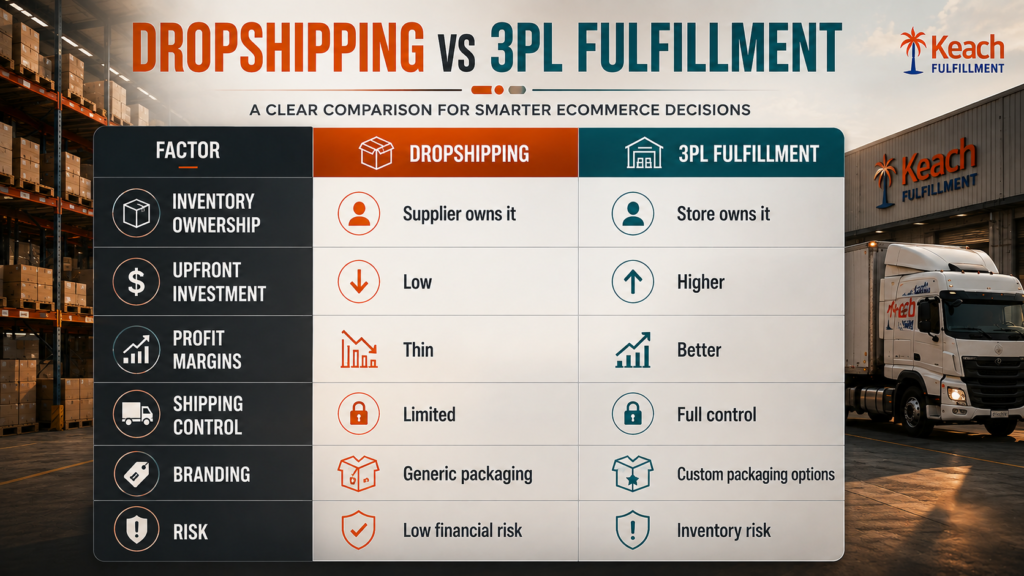
Inventory Ownership vs Dropshipping Model in WooCommerce and What Changes
The inventory ownership vs dropshipping model of WooCommerce will affect the way the business is run on a daily basis. In the case of dropshipping, the products never reach the store. They are directly delivered by the supplier to the customer, and the store owner controls this process. This model is cost-effective; however, the level of control in this scenario is limited.
WooCommerce fulfillment with inventory ownership, the store purchases the product and keeps it in the fulfillment center. It controls the packaging of the product, the delivery speed, and the quality of the whole process. There is an additional cost involved; however, the brand equity gained from it is worth far more than a margin.
Keach Fulfillment helps WooCommerce stores transition to 3PL fulfillment smoothly.
See what owning your inventory can do for your margins.Transitioning from WooCommerce Dropshipping to a 3PL Warehouse and What It Takes
The process of transitioning from WooCommerce dropshipping to a 3PL warehouse starts with picking the right products. Not every dropshipping product makes sense to stock. The best candidates are the products that sell consistently and have strong margins. Buying inventory for slow-moving products ties up cash and increases risk.
WooCommerce fulfillment through a 3PL partner handles the receiving, storage, and shipping. The store owner sends the purchase order to the supplier, and the supplier ships the products to the warehouse. The integration connects the store to the fulfillment system, and orders start flowing automatically. The transition takes effort, but the payoff is a business with better margins and more control.
How orders move through the system: This guide on WooCommerce order fulfillment covers the automation side.
Profit Margins: Standard WooCommerce Fulfillment vs Dropshipping and Why It Matters
The profit margins standard WooCommerce fulfillment vs dropshipping comparison reveals the real cost of the dropshipping convenience. Dropshipping suppliers charge a premium for the service, and the store owner pays it on every single order. The margin gets squeezed, and the business struggles to invest in growth.
WooCommerce fulfillment with owned inventory changes the math. The product cost drops, the fulfillment cost drops, and the margin expands. The extra margin becomes the fuel for marketing and product development and everything else that grows the business. For stores that have proven their products sell, moving to 3PL fulfillment is often the single best decision for long-term profitability.
A Business That Owns Its Own Future
Dropshipping is a great way to start. It tests products and builds experience without much financial risk. But the businesses that grow into something lasting are the ones that eventually own their inventory and control their fulfillment. The shift is not easy, but it is worth it.
We help WooCommerce stores make the transition from dropshipping to 3PL fulfillment. The inventory gets stored, the orders get shipped, and the margins improve. The business grows stronger with every shipment.
Let Keach Fulfillment handle your WooCommerce fulfillment after the dropshipping phase.
Schedule a consultation now!