
Running an ecommerce business looks simple from the outside. Orders come in, products go out, and everything seems to move smoothly. But behind the scenes, one system quietly controls everything, inventory.
If your inventory is not managed properly, problems start to stack up. Overselling, stockouts, delayed orders, and unhappy customers. On the other hand, strong inventory management for ecommerce keeps operations stable and helps businesses grow with confidence.
This guide breaks down everything you need to know. From basic concepts to practical systems, you will learn how to manage inventory in a way that actually supports your business.
Simplify your operations and reduce costly mistakes.
Partner with Keach Fulfillment for smarter inventory solutionsWhat Is Inventory Management in Ecommerce?
At its core, inventory management for ecommerce is the process of tracking, storing, and controlling products from the moment they arrive until they are sold.
It is not just about counting stock. It is about knowing:
- what products do you have
- where they are stored
- how fast are they selling
- when to restock
Without this visibility, even a growing ecommerce business can quickly lose control.
A strong system helps you avoid overstocking slow-moving items while ensuring your best sellers are always available.
Why Inventory Management Matters More Than Ever
Ecommerce has changed how customers shop. They expect fast delivery, accurate orders, and real-time stock availability.
If your system fails, customers notice immediately.
This is where ecommerce inventory control becomes essential. It helps you:
- prevent stockouts
- reduce excess inventory
- improve order accuracy
- maintain customer trust
For example, imagine selling a product that shows as available online but is actually out of stock. That one mistake can cost you not just a sale, but a customer.
Key Components of Effective Inventory Management
Understanding the building blocks helps you create a system that works long term.
1. Inventory Tracking
Tracking means knowing exactly how much stock you have at any given time. This is often handled through an inventory management system ecommerce businesses rely on to update stock levels automatically.
2. Warehouse Organization
Good warehouse inventory management ensures products are stored in a way that makes them easy to locate and process.
Clear labeling, proper shelving, and organized layouts reduce delays and errors.
3. Stock Replenishment
You need a system to reorder products before they run out. This requires analyzing sales data and setting reorder points.
4. Demand Forecasting
Forecasting helps you predict future sales based on past trends. This is especially useful during seasonal peaks or promotions.
Types of Inventory Management Methods
Different businesses use different methods depending on their size and operations.
| Method | How It Works | Best For |
|---|---|---|
| FIFO (First In, First Out) | Old stock is sold first | Perishable goods |
| LIFO (Last In, First Out) | New stock is sold first | Specific industries |
| Just-In-Time | Stock arrives only when needed | Low storage capacity |
| Safety Stock | Extra inventory is kept as backup | High-demand products |
Choosing the right method depends on your product type and sales patterns.
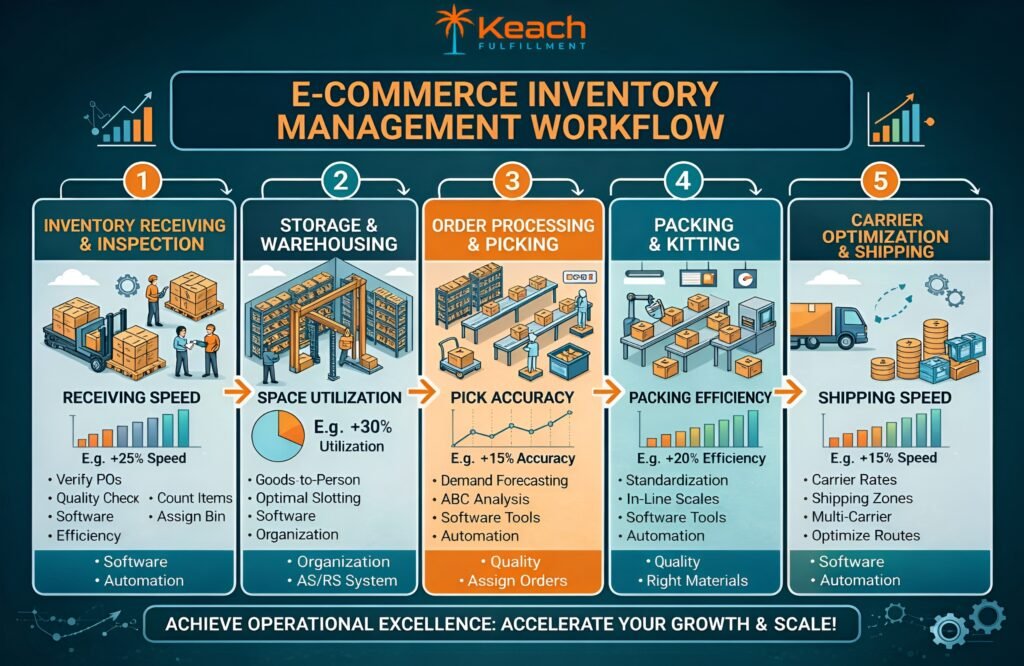
Common Inventory Challenges Ecommerce Businesses Face
Even well-established businesses face inventory issues. The difference is how they handle them.
Overstocking
Buying too much inventory ties up cash and storage space.
Stockouts
Running out of products leads to lost sales and frustrated customers.
Inaccurate Data
Manual tracking often leads to errors, which affect decision-making.
Poor Warehouse Flow
Without proper warehouse inventory management, order processing slows down.
These challenges highlight why many businesses turn to professional inventory management services for support.
Role of Technology in Inventory Management
Modern ecommerce relies heavily on technology. A reliable inventory management system that ecommerce businesses use can transform operations.
These systems offer:
- real-time stock tracking
- automated updates
- reporting and analytics
- integration with sales platforms
For example, when an order is placed, the system updates inventory automatically. This reduces errors and improves accuracy.
Technology also supports ecommerce inventory control by giving you clear insights into what is happening across your business.
Let experts handle your inventory while you grow
Keach Fulfillment keeps your stock organized and reliableBest Practices for Managing Ecommerce Inventory
Improving inventory management does not always require complex systems. Sometimes, small changes make a big difference.
Keep Inventory Data Updated
Always ensure your system reflects real stock levels. Delays in updates can lead to errors.
Use Inventory Software
Manual tracking is risky. A proper inventory management system that ecommerce businesses use improves accuracy and efficiency.
Optimize Warehouse Layout
Organized storage improves picking speed and reduces mistakes. Good warehouse inventory management directly impacts order fulfillment services.
Monitor Sales Trends
Understanding what sells and when helps you plan better. This reduces both overstock and stockouts.
Work with Experts
As your business grows, managing inventory becomes more complex. This is where inventory management services can help streamline operations.
When Should You Outsource Inventory Management?
Not every business needs to outsource right away. But there comes a point where handling everything in-house becomes difficult.
You should consider outsourcing if:
- your order volume is increasing
- inventory errors are becoming frequent
- warehouse operations are slowing down
- you want to scale without operational stress
Outsourcing allows you to focus on growth while experts handle inventory operations.
How Keach Fulfillment Supports Ecommerce Businesses
At Keach Fulfillment, inventory is not just stored. It is managed with structure and accuracy.
Our approach focuses on:
- organized inventory systems
- real-time tracking
- efficient warehouse operations
- reliable ecommerce inventory control
We understand that inventory is the backbone of your business. When it is managed properly, everything else becomes easier.
Take the next step toward smoother operations
Partner with Keach Fulfillment for scalable inventory supportConclusion
Inventory management is one of the most important parts of running a successful ecommerce business. It affects everything from customer satisfaction to profitability.
By building strong systems, using the right tools, and following proven practices, businesses can avoid common challenges and operate more efficiently.
Whether you are just starting or scaling rapidly, investing in better inventory management for ecommerce will always pay off. With the right support from Keach Fulfillment, you can create a system that grows with your business and keeps your operations running smoothly.