
Selling on Amazon sounds simple until you read the prep requirements. Polybagging, labeling, barcode scanning, box weight limits. The list never ends. That is why sellers turn to professional help. But before you outsource, you need to understand the costs.
FBA prep pricing confuses a lot of sellers. Some quotes look cheap upfront but double once the invoice arrives. Others seem expensive until you calculate what your time is worth. Understanding the fee structure helps you make a smart decision.
What FBA Prep Actually Involves
FBA prep is getting your products ready for Amazon’s warehouses. Amazon has strict rules. If you break them, your inventory gets rejected.
A prep center handles tasks like checking for damage, applying FNSKU labels, and polybagging loose items. They also bundle multipacks and create case packs. Each task has a cost attached.
Breaking Down the Cost Structure
Most FBA prep services charge per item. You pay a flat rate for each unit processed. The rate depends on the complexity of the prep work.
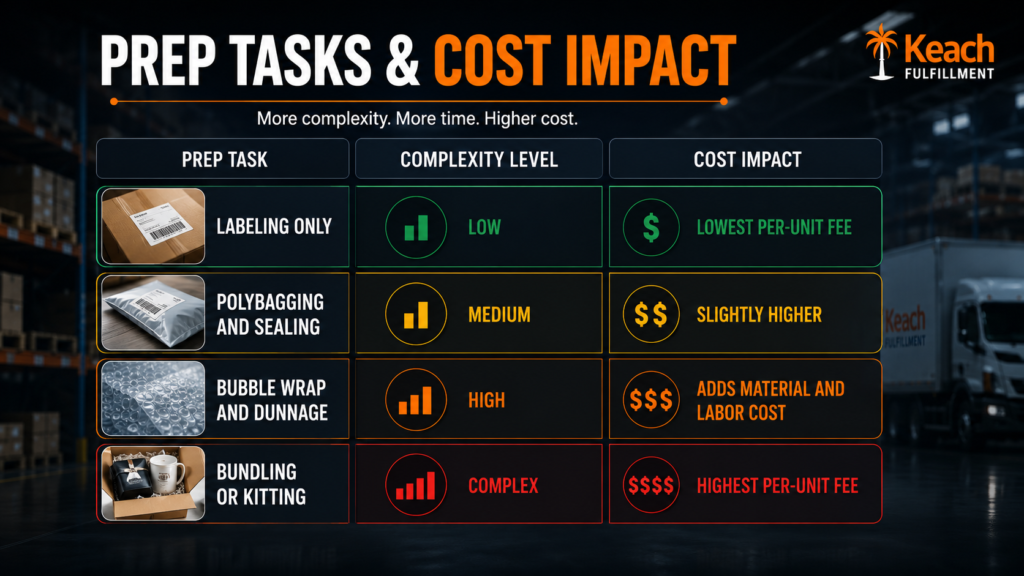
Higher volume often earns you a discount. Small batches cost more per unit because setup takes time.
Understanding the Fee Structure
Amazon FBA prep service fees explained in detail matter because hidden costs eat your margins. Some prep centers charge a receiving fee. Others roll it into the per-unit price. Storage fees are another factor. If your goods sit for weeks, you pay for that space.
Keach fulfillment helps with prep costs.
Get a clear breakdown from a team that values transparency.Per Item Costs for Common Tasks
Polybagging is one of the most common prep tasks. Amazon requires it for products that can leak or get damaged. Per-item FBA prep costs for polybagging and labelling usually include the bag material and labor. Labeling is separate. Each unit needs an FNSKU barcode. A prep center does this in seconds. They have the right equipment. What takes you an hour takes them minutes.
Hidden Fees to Watch For
Hidden fees in Amazon FBA prep centers to watch for include palletizing charges, box fees, and disposal fees. You might also see charges for label removal or repacking damaged boxes. Always ask for a complete fee schedule before signing anything. If a quote seems too vague, that is a red flag.
Prep Center vs In House Prep
A cost comparison Amazon prep center vs in house prep reveals interesting insights. Doing prep yourself seems cheaper. But you forget to factor in your time. If you earn thirty dollars an hour running your business, every hour spent labeling is lost revenue. Prep work is tedious. A prep center frees that time. There is also the error factor. If you mislabel a box, Amazon rejects it. A professional prep team rarely makes those mistakes.
Choosing the Right Prep Partner
Not every prep service fits every seller. You need a partner that understands your product category. Ask about their experience with similar products. Location matters too. A prep center close to your supplier reduces inbound shipping costs. Look for a team that communicates well.
Why Sellers Outsource FBA Prep
Convenience is a big factor. A prep center handles the details so you do not have to. They store your inventory and process it quickly.
Scalability is another reason. During Q4, order volumes spike. A prep center absorbs that surge.
Quality control is the final piece. They catch damaged products before Amazon does.
Conclusion
Understanding Amazon FBA prep service fees explained clearly helps you budget properly. Keach Fulfillment offers transparent pricing and reliable service. You know what you pay. You know what you get. That clarity makes all the difference.
Your time is better spent growing your brand.
Let a professional prep team handle the tedious work.